2026 / Project
Case study: Human-reviewed AI document workflows
How I built AI tools that read operational documents while keeping a person responsible for every record that matters. A two-minute read.
The problem
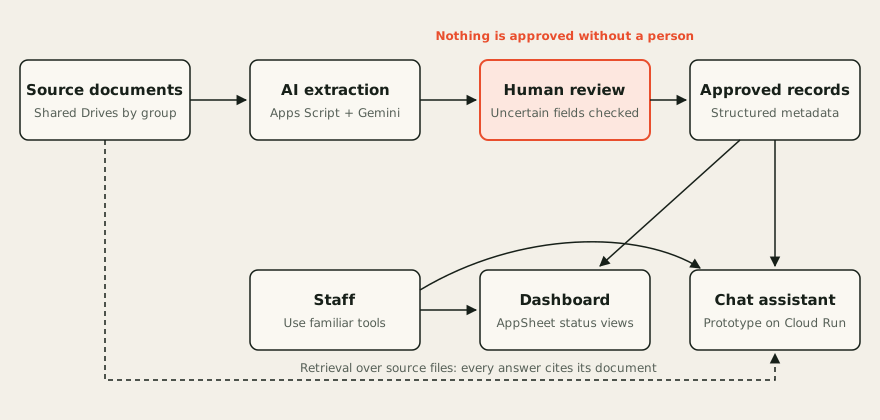
Operational documents, including government permits, lived in shared folders. Turning them into searchable records by hand is slow, and letting an AI fill those records alone is too risky when they carry legal consequences. The goal was faster retrieval without giving up human accountability.
The approach
AI does the reading; people make the decisions. The system extracts metadata, flags anything it is unsure of, and a reviewer approves it before it becomes a record anyone relies on. Questions are answered from those approved records or from the source files, with a citation back to the document. Google Groups and Shared Drives set who owns and can read each department’s files.
Built versus deployed
| Component | Status |
|---|---|
| Permit metadata extraction (Apps Script + Gemini 2.0 Flash) with human verification and AppSheet review views | Built; production deployment was pending when the internship ended in March 2026 |
| Cited document Q&A over Google Drive (Vertex AI Search) | Prototyped |
| Document-status assistant (Python/Flask on Cloud Run, via WhatsApp) | Designed and presented; live use not verified |
| Versioned document-control and readiness tracking (Cloudflare Workers + D1) | Implemented and locally tested; production acceptance not yet confirmed |
| Checklist-compliance checker for import/export and environmental (AMDAL) requirements | In trials; not yet used by real users |
| Meeting-transcription pipeline (Whisper) | Built |
There is no measured time-saving baseline yet, so this page makes no efficiency claims. The work was presented to company leadership on 2 March 2026.
My contribution
I built the permit-extraction workflow with its human-review step and AppSheet views, prototyped the cited Q&A, and designed the document-status assistant during my internship (January to March 2026). As Strategic Technical Advisor from August to October 2026, I specified and implemented the document-control system and took the compliance checker to trials.
Lessons
- Review is a design feature, not a fallback. Deciding which fields need a person shapes the whole data model.
- Show the source. An answer that links back to its document is easier to check than one that only sounds confident.
- Meet people where they already work. The tools ran in a dashboard and a chat channel rather than a new application.
- Access control is part of the architecture. Ownership of the shared drives had to be settled before any AI could read them.
Company documents, client names, and identifiers are deliberately left out. The document-control system and other internal tools are described in Compliance Document Control & Internal Tools.
Related work
All projectsCompliance Document Control & Internal Tools
A document-control system for compliance projects on Cloudflare Workers and D1, plus contributions to a live procurement app and Claude skills for company documents.
View project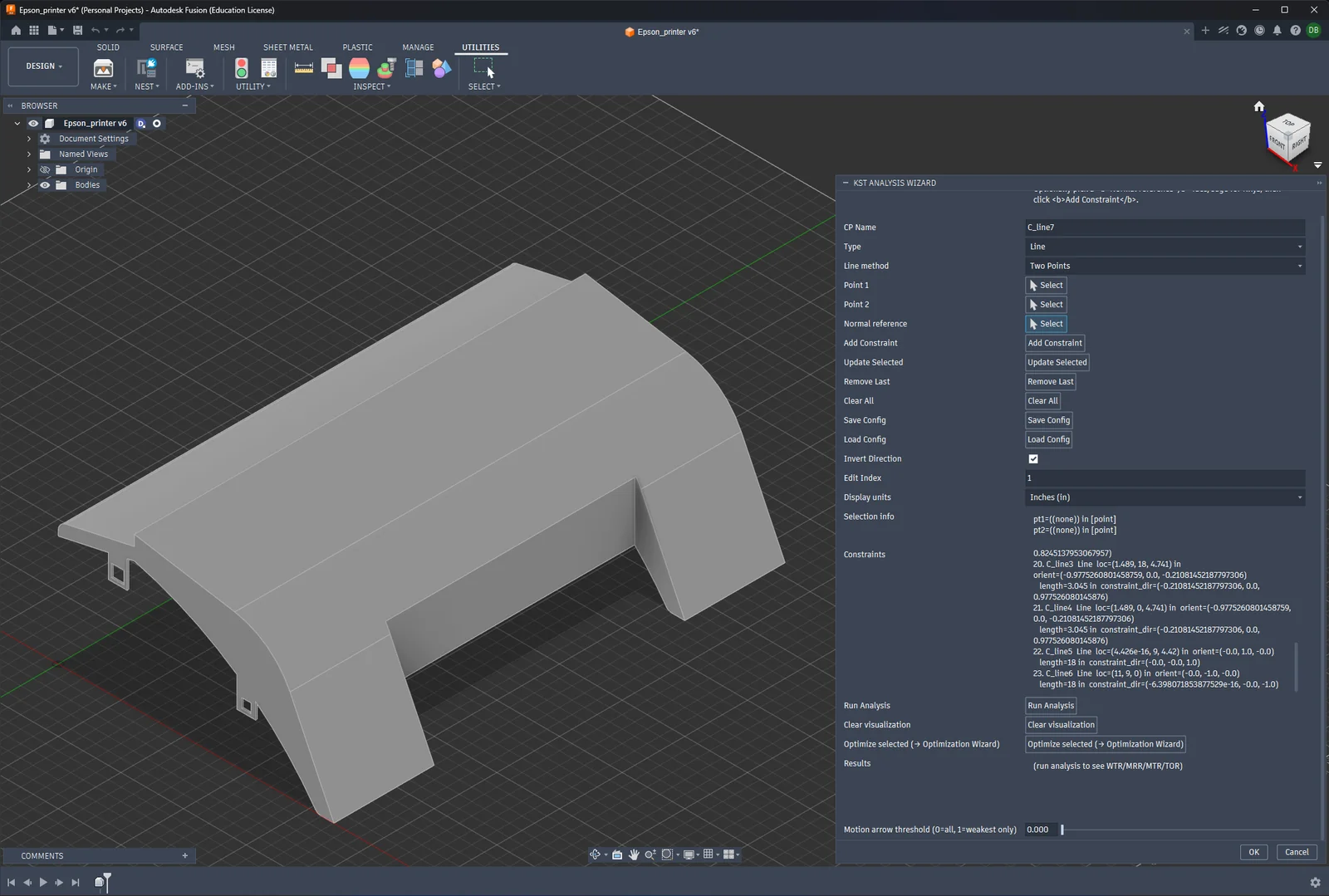
CAD-Integrated KST Assembly Rating Tool
A verified Python and Fusion 360 workflow for analyzing how assembly features constrain rigid-body motion.
View project